How to Organize a Networking Event on a Small Budget
The best networking events I've been to didn't cost much. A room, decent lighting, drinks that weren't warm, and the right forty people. The worst ones spent a fortune on a venue that echoed and a photo booth nobody used.
So if you want to organize a networking event on a small budget, the good news is that budget rarely correlates with how good the night feels. What matters is curation, flow, and a few small touches that signal you cared. Let me walk you through the real costs and what you can quietly skip.
Where the money actually goes
Let's be honest about numbers. For a 40-person evening event, your three biggest line items are usually space, drinks, and food. Everything else is noise.
You can find free or cheap space if you stop looking at event venues. A coworking space after hours, a friend's gallery, a brewery's back room, or a startup office on a Thursday. Many will give you the room for free if you bring people through their door. I've hosted in a furniture showroom that charged nothing because they liked the foot traffic.
Drinks are where small budgets die. A full open bar for 40 people can run $600 or more. Instead, do one signature drink plus beer and wine, or go BYOB at a space that allows it. Budget around $8 to $12 per head for drinks and you're being generous. Skip catering entirely and put out cheese, bread, olives, and fruit. It looks intentional and costs a fraction of a caterer.
What to skip without anyone noticing
Printed name badges with a label printer? Skip them. Custom step-and-repeat banners? Skip. A DJ, a photographer, branded napkins, a welcome gift bag. None of these make people network better, and most make an event feel like a trade show.
What you actually need is a way to get the right people in the room and a way for them to stay connected after. That second part is where most cheap events fail. People meet, exchange nothing usable, and forget each other by Monday.
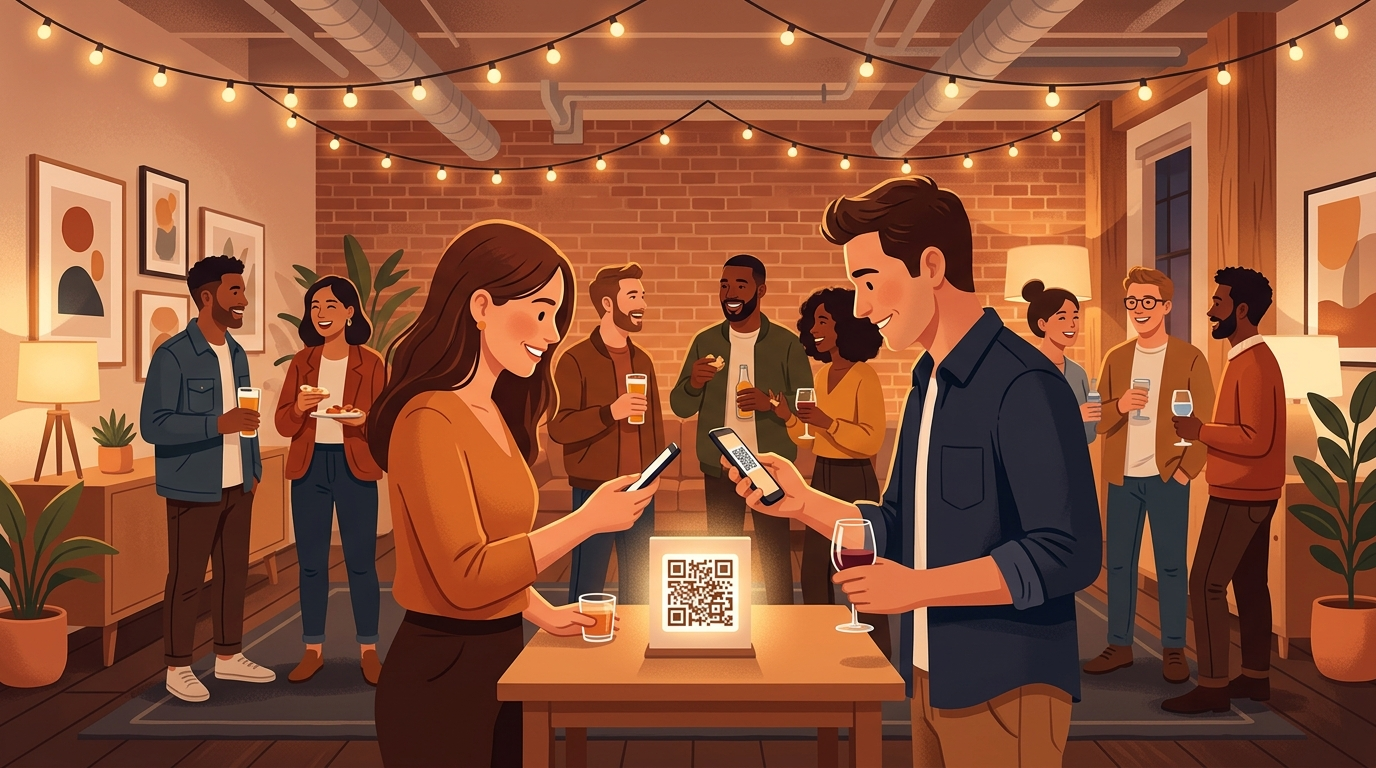
This is the one thing I'd never cut. Use a free QR-based contact tool like Card Drop so attendees can collect each other's details with one scan. No paper cards, no awkward typing into phones, no lost LinkedIn requests. You print one sign, set it up in two minutes, and your guests leave with contacts instead of vibes.
Free and cheap tools that do real work
Your tooling can be almost entirely free if you're disciplined. Here's roughly how the pieces fit together for a budget event.
- Invites and RSVPs through a free Luma or Eventbrite page. Eventbrite works well for free events and people already trust it.
- Contact collection through Card Drop, so nobody walks out empty handed.
- A shared playlist on Spotify instead of paying for music.
- Canva for your one poster and your one social graphic.
That's the whole stack. Notice there's no event app, no badge system, no separate check-in software. For a 40-person night, that stuff adds cost and friction without adding warmth. The big platforms like Whova and Bizzabo are built for conferences with hundreds of people and budgets to match. They'll quietly eat your entire budget on features you don't need.
Here's an honest comparison of the contact-collection approaches when you're working cheap.
| Approach | Pros | Cons |
|---|---|---|
| Paper business cards | Zero setup, familiar | Half get lost, no follow-up data, feels dated |
| Full event app (Whova, Swapcard) | Rich features, attendee profiles | Expensive, overkill for small events, slow to set up |
| Card Drop | Free to start, one scan, works on any phone | Focused on contacts, not a full event platform |
Making it feel premium without premium prices
Premium is mostly lighting and pacing. Kill the overhead fluorescents and bring in a few warm lamps or string lights. A room at 2700K instantly looks like money. This is the cheapest upgrade you can make and the one people feel most.
Pacing matters just as much. Give the night a shape. Open with twenty minutes of free mingling, do a five-minute welcome where you tell people why they're here and how to use Card Drop, then let it breathe. A loose structure makes shy people braver and keeps the loud ones from dominating.
Finally, curate hard. Forty interesting people beat two hundred random ones. Personally invite a core group of fifteen who you know will show up and talk to strangers. They set the temperature for the whole room, and that costs nothing but a few text messages.
You can organize a networking event small budget and all, that genuinely outclasses the catered ones people forget. Spend on light and the right faces. Skip the badges and the banners. And make sure everyone leaves with a phone full of new contacts instead of a tote bag full of flyers.
When you're ready to set up the contact side, you can create your event in a couple of minutes at Card Drop. It's the one part of the budget I'd protect, because the whole point of the night is what happens after it ends.